
Storefronts, retail centers, restaurants, franchise rollouts, shopping centers, service businesses, and high-visibility commercial brand programs.
Trim-cap Front-lit Channel Letters
High-visibility front-lit letters for commercial signage and brand programs.
Trim-cap Front-lit Channel Letters use a translucent acrylic face retained by a defined trim-cap profile, producing bright, even face illumination for storefronts, retail locations, franchise programs, and branded commercial environments.
Lighting Style
Front-lit / face-lit
Face System
Acrylic + trim cap
Support
Quote to production

Production Focus
Designed for consistent brand matching, scalable production,
and installer-ready project documentation.
Built for
project partners
Signage Companies
Design Firms
Franchise Owners
Corporate Accounts
A bright illuminated acrylic face with a defined trim-cap border, delivering strong nighttime visibility and a familiar commercial channel-letter appearance.
Artwork feasibility, letter depth, acrylic face color, trim-cap color, return finish, LED color, mounting method, wiring exits, shipping needs, and production requirements.
Technical Specifications
Fabrication data for Trim-cap Front-lit Channel Letters.
Review construction, dimensional planning, face illumination, materials, mounting, and quote requirements.
Final specification
Confirmed after artwork review
Illumination
Front-lit / face-lit
Face
Translucent acrylic
Face Graphics
Vinyl or UV printing
Returns
Aluminum or 304 stainless steel
Mounting
Direct mount or raceway
02 / Core Specs
Primary production specifications.
Final values depend on artwork, finished size, stroke width, face treatment, return material, lighting, mounting, and installation conditions.
Specification
Planning Standard
Production Notes
Letter Style
Trim-cap Front-lit Channel Letters
Translucent acrylic faces provide direct face illumination.
Face
Translucent acrylic
The face can use a standard translucent color, translucent vinyl, or UV-printed graphics.
Face Retention
Standard Trim-cap, GemTrim Flex, or Integrated Trim-cap
The selected system secures the illuminated face and determines how the letter opens for service.
Returns
Aluminum or 304 stainless steel
Aluminum provides a lightweight return for painted finishes; 304 stainless steel supports brushed, polished, or painted premium finishes.
Return Depth
Commonly 3" to 5"
Final depth is confirmed after artwork and LED-layout review.
LED System
Project-specific modules
Module spacing is planned for even face illumination and serviceability.
Mounting
Direct mount or raceway
Selected around wall type, code requirements, access, and installer preference.
Application
Interior or exterior
Exterior builds require project-specific sealing, drainage, wiring, and finish review.
03 / Size & Depth
Depth and stroke-width standards by service design.
Choose the matrix that matches how the letter opens for service. The dimensional ranges below are planning standards; final values are confirmed from the approved vector artwork before fabrication.
How to Use This Guide
Match the construction system first, then verify that the available
stroke width supports the selected return depth.
Systems 01 + 02
Face-retention systems
Use this matrix for Standard Trim-cap and GemTrim Flex Front-lit Channel Letters. The illuminated face and retaining profile are removed for service, while the returns and the back remain mounted.
Service Configuration
Face-service design
Removed for Service
Face and retaining profile
Remains Mounted
Returns and the back
Matrix A
Shared depth-to-stroke standard
Applies to both face-retention systems.
Return Depth
Stroke Width Range
1-1/4" to 2"
3/8" to 3/4"
1.57" to 3.15"
3/4" to 2.36"
2.36" to 4"
2.36" to 3.15"
3.15" to 5.9"
3.15" to 4.7"
System 03
Integrated service assembly
Use this matrix for Integrated Trim-cap Front-lit Channel Letters. The face, trim cap, and returns remove together while the back remains mounted.
Retainer Minimums
Material-specific requirements
304 Stainless Steel
0.15" minimum
Aluminum
0.30" minimum
Matrix B
Integrated depth-to-stroke standard
Applies to the removable face-and-return assembly.
Return Depth
Stroke Width Range
1.57" to 2.36"
3/4" to 1.57"
2.36" to 3.15"
1.57" to 3.15"
3.15" to 5.9"
Up to 3.15"
Before Final Approval
Production dimensions are confirmed from the approved artwork and installation requirements.
Overall Size
Provide target dimensions
Send overall width, target letter height, wall dimensions, or brand-standard drawings.
Artwork Feasibility
Stroke width is verified
Narrow strokes, tight corners, and small counters can affect face retention, LED spacing, and service access.
Production Review
Final values are confirmed
Depth, stroke width, retainer dimension, material, mounting, and electrical access are finalized before fabrication.
01 / Construction
Three Front-lit Channel Letter construction systems.
Compare the Standard Trim-cap, GemTrim Flex, and Integrated Trim-cap configurations for Front-lit Channel Letters.
System 01
Standard Trim-cap Front-lit Channel Letters
A translucent acrylic face is secured to the metal return with a conventional trim-cap profile, creating a defined perimeter.

Cross Section
Standard Trim-cap Channel Letter assembly
Shows the illuminated face, trim-cap perimeter, metal return, internal LEDs, and mounting interface.

Standard Trim-cap
Finished Effect
Defined trim-cap perimeter
The bright acrylic face is framed by a visible trim-cap border for a familiar commercial channel-letter appearance.
Face
Translucent acrylic
Retention
Standard Trim-cap profile
Returns
Aluminum or 304 stainless steel
System 02
GemTrim Flex Front-lit Channel Letters
A GemTrim Flex profile secures the illuminated face while creating a clean, flexible perimeter for detailed letterforms.
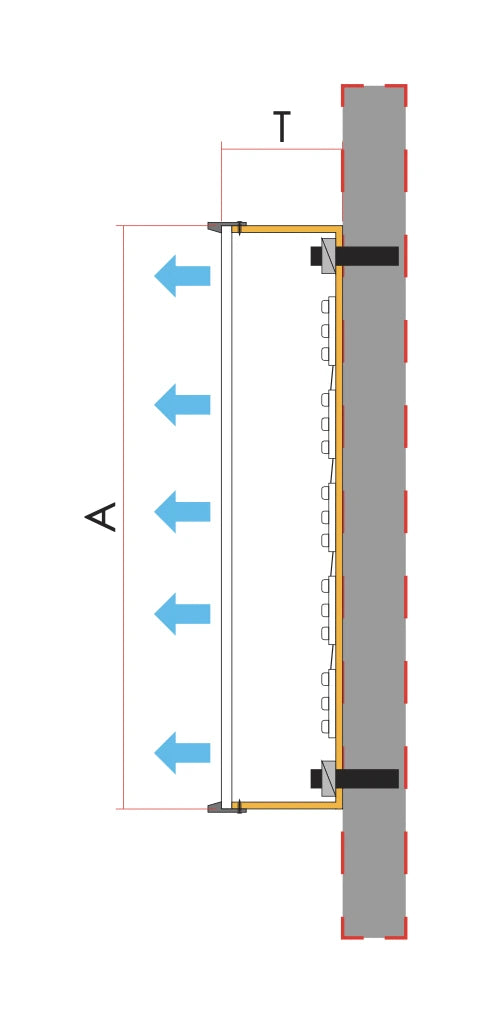
Cross Section
GemTrim Flex Channel Letter assembly
Shows the flexible face-retention profile, illuminated face, metal return, LEDs, and mounting interface.

GemTrim Flex
Finished Effect
Refined flexible perimeter
The illuminated face remains visually dominant, supported by a clean GemTrim Flex edge profile.
Face
Translucent acrylic
Retention
GemTrim Flex profile
Returns
Aluminum or 304 stainless steel
System 03
Integrated Trim-cap Front-lit Channel Letters
The fasteners are positioned lower on the returns, allowing the face, trim cap, and returns to be removed together as one service assembly.
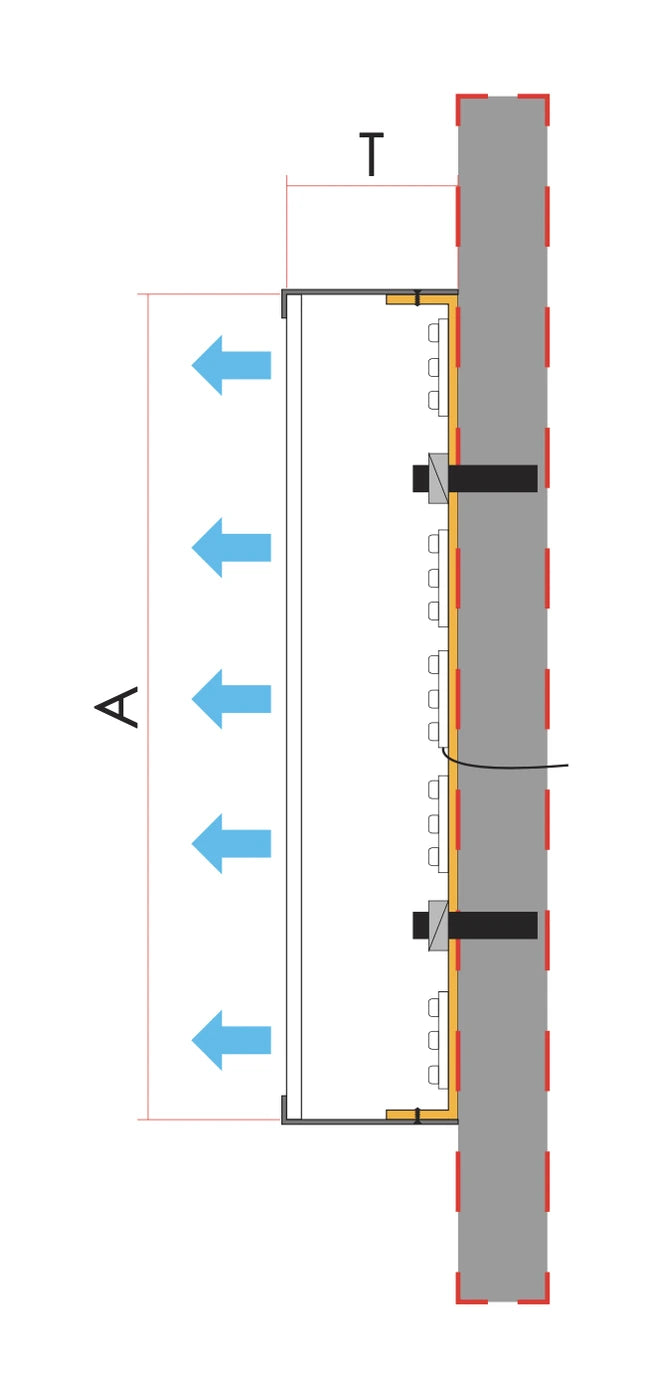
Cross SectionIntegrated Trim-cap Channel Letter assembly
The lower return-fastener position allows the face, trim cap, and returns to detach together while the back remains mounted.
Integrated Trim-cap
Finished EffectStandard Trim-cap appearance
The illuminated appearance matches Standard Trim-cap Front-lit Channel Letters; the difference is the removable face-and-return service assembly.
Face
Translucent acrylic
Retention
Integrated Trim-cap assembly
Service Method
Face, trim cap, and returns remove together
Shared Construction Details
Key components used across all three Front-lit Channel Letter systems.
01
Face
Translucent acrylic
The face diffuses the LED output and establishes the illuminated brand color.
02
Face Retention
Standard Trim-cap, GemTrim Flex, or Integrated Trim-cap
The selected system secures the illuminated face and defines how the letter opens for service.
03
Letter Body
Metal returns with aluminum back
Aluminum or 304 stainless steel returns provide depth and structure, while the aluminum back supports LEDs, wiring, and mounting.
04
Illumination
LED modules and reflective interior
Module placement and interior reflection are planned for consistent face brightness.
05
Installation
Direct mount or raceway
Mounting hardware, raceway needs, wire exits, power access, and service requirements are confirmed.
04 / Lighting
Lighting engineered for color, control, and uniformity.
Choose fixed white illumination from 3500K to 6500K or RGBW color-changing illumination. Face material, graphics, return depth, LED spacing, power, and controls are reviewed together.
Lighting Platforms
Static white or RGBW illumination
Internal LEDs illuminate the translucent acrylic face. The final platform is selected around brand color, viewing environment, brightness, and control requirements.
Static White
3500K–6500K
Warm white through daylight white for a consistent fixed appearance.
RGBW
Full color + dedicated white
Programmable color with a dedicated white channel and compatible controller.
White Color Temperature
3500K to 6500K
Warm, neutral, cool, or daylight white is selected to match the environment and approved brand presentation.
RGBW Capability
Color changing + true white
RGBW combines programmable color with a dedicated white channel for cleaner white illumination than RGB-only systems.
Face & Graphics
Output is face-dependent
Acrylic color, translucent vinyl, and UV-printed graphics influence brightness, color accuracy, and appearance.
LED Uniformity
Balanced module coverage
Depth, stroke width, corners, face transmission, and module density are coordinated to reduce hotspots and dark areas.
Power & Controls
Load and access planned
Power-supply capacity, RGBW controller requirements, dimming, ventilation, and service access are confirmed.
Wiring & Service
Confirmed before fabrication
Wire exits, remote power or controller locations, raceway routing, wall penetrations, and installer notes are documented.
05 / Materials & Finish
Materials selected around visibility and brand standards.
Acrylic face color, graphic method, trim profile, return material, finish, environment, mounting, and lighting are coordinated as one system.
Face
Translucent acrylic
Face color and light transmission are selected around the required illuminated appearance.
Face Graphics
Translucent vinyl or UV printing
Vinyl is ideal for solid colors and brand matching; UV printing supports gradients, patterns, and detailed multi-color artwork.
Face Retention
Standard Trim-cap, GemTrim Flex, or Integrated Trim-cap
Retention type and color are selected around artwork, service method, return finish, scale, and brand requirements.
Returns
Aluminum or 304 stainless steel
Aluminum is lightweight and commonly painted; 304 stainless steel can be brushed, polished, or painted for a premium finish.
Back
Aluminum letter back
Supports LEDs, wiring, mounting hardware, and the enclosed letter structure.
Interior Finish
Reflective white coating
Improves LED reflection and supports consistent face illumination.
06 / Quote Prep
Information required for an accurate quote.
Supplying the core project details upfront helps confirm feasibility, pricing, production requirements, and lead time.
Best Starting Point
Send the artwork.
Vector artwork lets us review stroke width, trim-cap forming, depth, LED placement, and feasibility.
Initial Review Covers
01
Artwork and stroke feasibility
02
Face graphics, retention, and lighting
03
Mounting and electrical planning
Artwork
AI, EPS, SVG, or PDF
Vector files are preferred. Clean PDFs or high-resolution references can be used.
Size
Width or letter height
Send overall width, target height, wall area, or brand-standard drawings.
Face, Graphics & Returns
Material and color references
Provide acrylic color, vinyl or UV-print requirements, retention-profile color, return material, finish, PMS, or brand references.
Install Location
Wall type and site photos
Include interior or exterior use, wall material, access conditions, and photos.
Electrical & Installation Planning
Confirm installation details before production.
Mounting Method
Direct or raceway
Confirm the preferred mounting approach, wall conditions, and permit requirements.
Power Supply
Location and access
Provide transformer location, access conditions, and available power.
Wire Exits
Routing and pass-throughs
Confirm wire exits, wall penetrations, raceway routing, and installer notes.